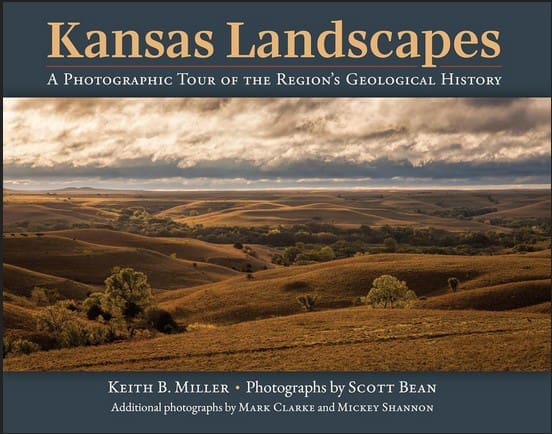
The Tallgrass Prairie: A Vanishing Ecosystem
I’m very grateful that I live in an area when I get to wander the tallgrass prairie in the Flint Hills. The tallgrass prairie once stretched across millions of acres in the center of North America, from Texas to Canada. This ecosystem supports an incredible diversity of plant and animal life. For example, nearly 500 plants, 150 birds, and 30-40 reptiles, amphibians, and mammals are present in the Tallgrass National Prairie Preserve in Kansas.
Today, however, the tallgrass prairie is a critically endangered ecosystem with only about 4% remaining, most in the Flint Hills region of Kansas. What remains is only a small fraction of its original range as can be seen in the graphic below (from: https://www.allaboutbirds.org/news/power-or-prairie-can-wind-energy-and-wildlife-coexist-in-the-flint-hills/ used with permission).
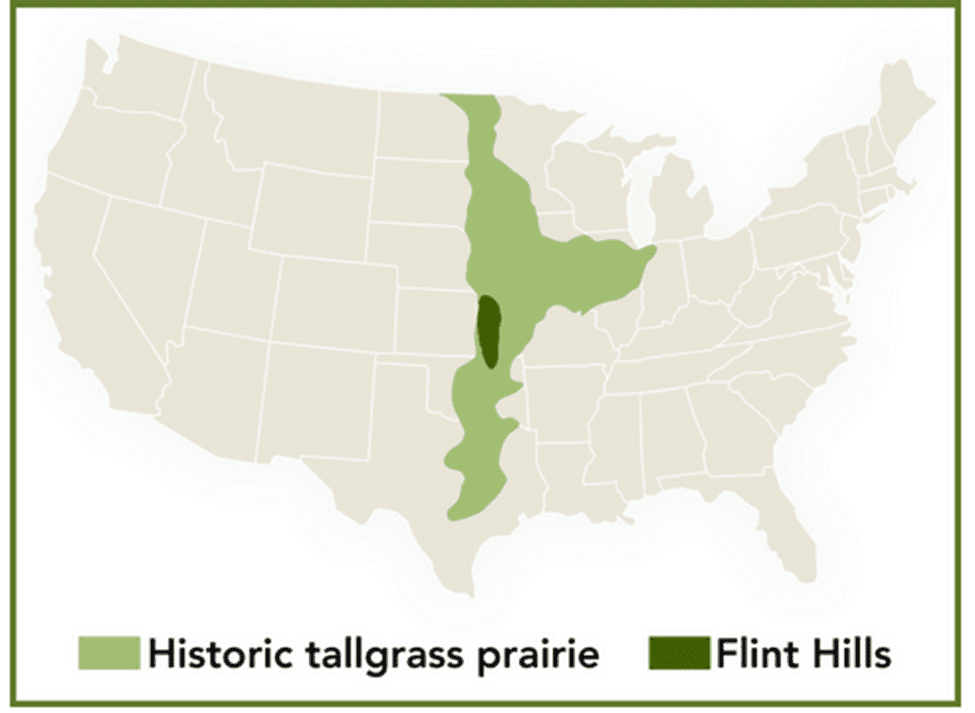
The Flint Hills and the Tallgrass Prairie
The Flint Hills contains the largest remaining contiguous stretch of tallgrass prairie in North America. A major reason that the tallgrass prairie survived in the Flint Hills is due to the layer of rock beneath the surface which made the soil difficult to plow (examples of this are shown in the two photos below). While this rocky terrain discouraged farming, it proved ideal for grazing, allowing the prairie to remain largely intact. I love the landscapes in the part of Kansas and I’m grateful that I get to explore such an important ecosystem.
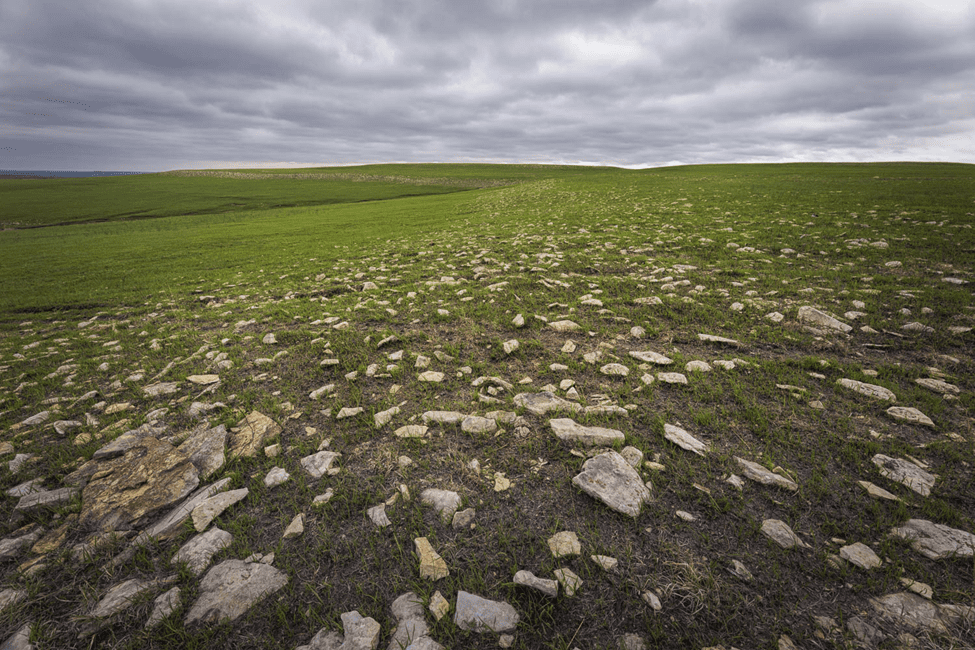
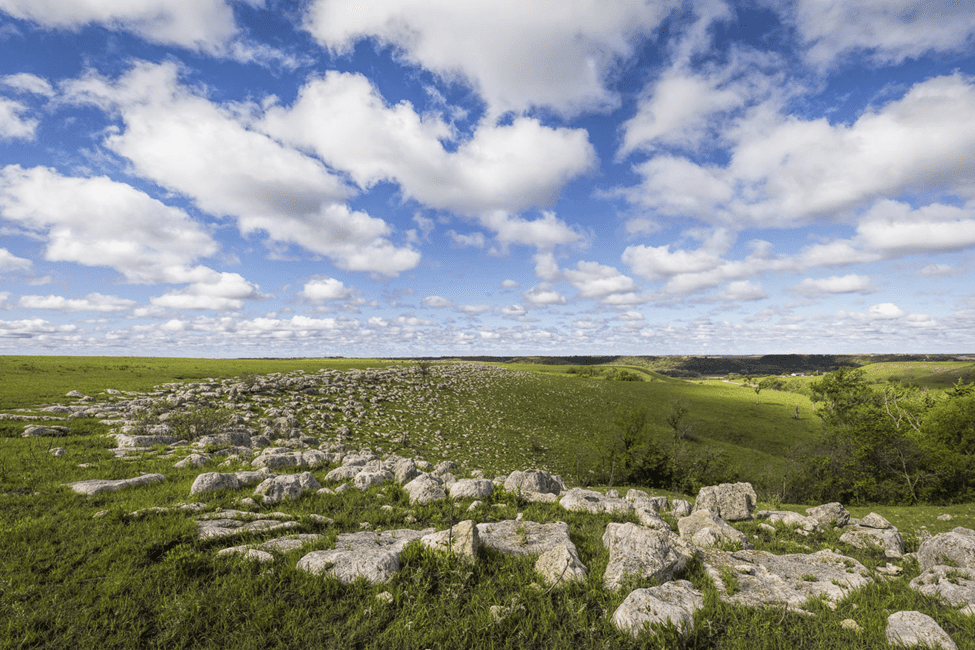
One of the best times to see the layers of rocks present in the Flint Hills is in the spring in pastures where prescribed burns took place. I’ve always thought of these rocks as the “bones of the prairie.”
Prescribed burns
So why are prescribed burns carried out in the Flint Hills each spring? Fire has been a natural and necessary force in the prairie ecosystem. Before European settlement, lightning strikes and Indigenous land management practices regularly ignited fires that swept across the plains. These fires prevented trees and woody plants from taking over, recycled nutrients back into the soil, and stimulated fresh growth. Over thousands of years, the prairie developed as a fire-dependent ecosystem, shaped by frequent burning and grazing from large animals like bison. Prairie grasses evolved under these conditions, developing adaptations that allow them to survive and quickly recover. For example, much of their growing tissue lies below ground, protecting them from fire and enabling rapid regrowth after burning. Fire also burns off excess plant material from previous years and returns nutrients to the soil, which in turn can support new plant growth.
Without regular prescribed burns, the tallgrass prairie would face serious challenges. Without the burns, shrubs and trees would take over, eventually transforming the grasslands into shrubland or forest. Fire therefore plays a critical role not only in maintaining the open character of the prairie, but also in sustaining the balance between grasses, grazing animals, and the broader ecosystem that has developed over thousands of years.
While the prescribed burns are essential in maintaining and managing the tallgrass prairie, there is some controversy surrounding the spring burns, especially related to air quality due to the smoke.
Because of this, state agencies and land managers have made efforts to reduce these impacts while preserving the benefits of fire. For example, The Kansas Flint Hills Smoke Management Plan encourages landowners to consider weather conditions, use smoke modeling tools, and spread burns over a longer period when possible.
Photographing the Burns
I’ve always enjoyed photographing the burns each spring when I’ve had the chance. The fires can provide very dramatic scenes, especially in the evening or after dark. I’ve been fortunate to have the opportunity to photograph several burns over the years and have been invited to photograph burns alongside landowners on a couple of occasions.

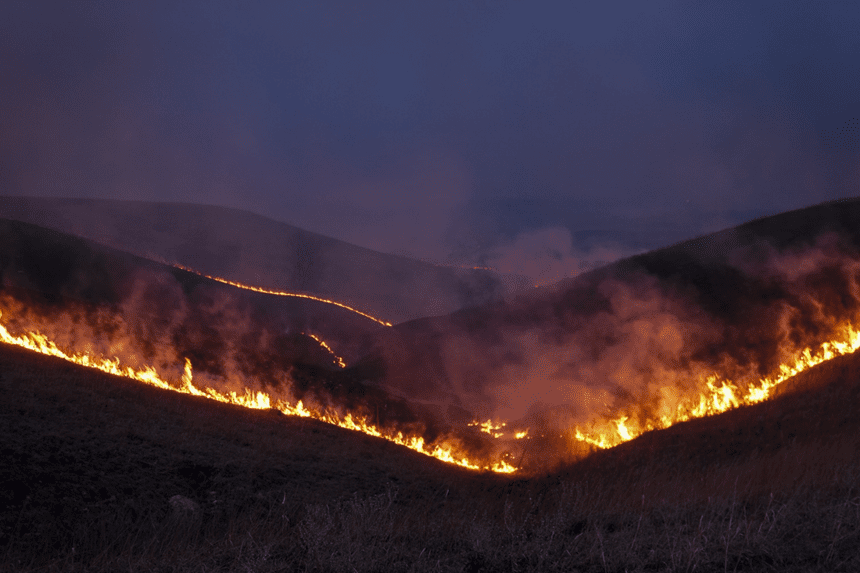
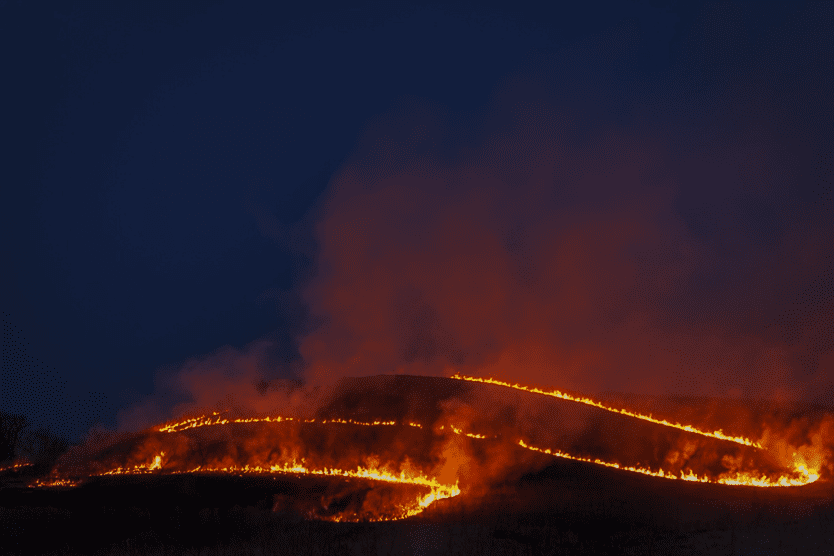
The lines of fire burning across the prairie provide almost endless opportunities for composing photos. I enjoy photographing wide-angle views of the prairie and tend to gravitate to similar views during burns like the photos above.
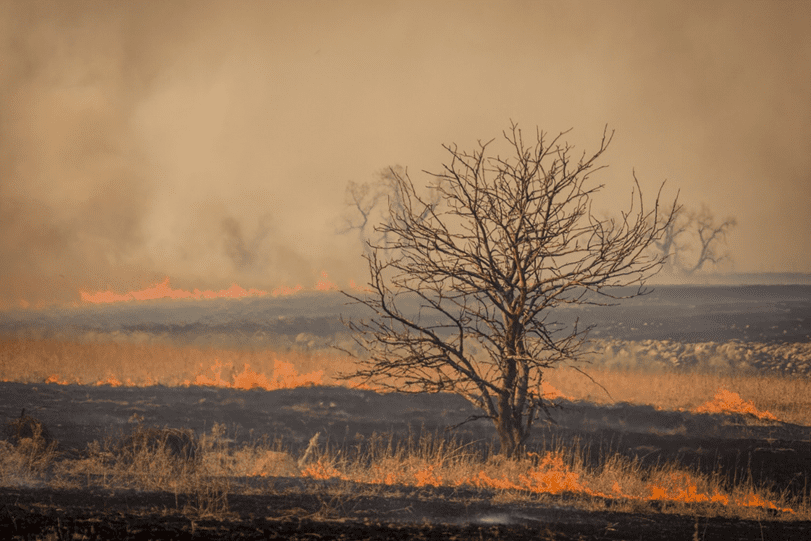

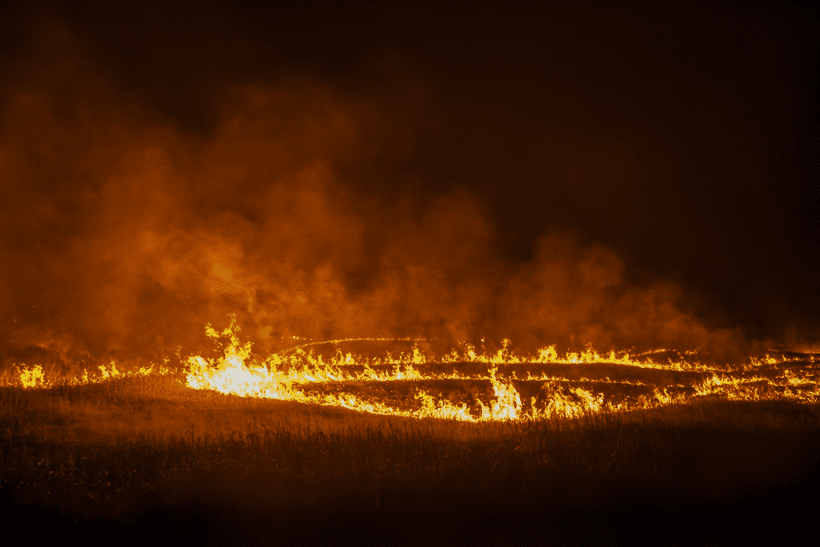
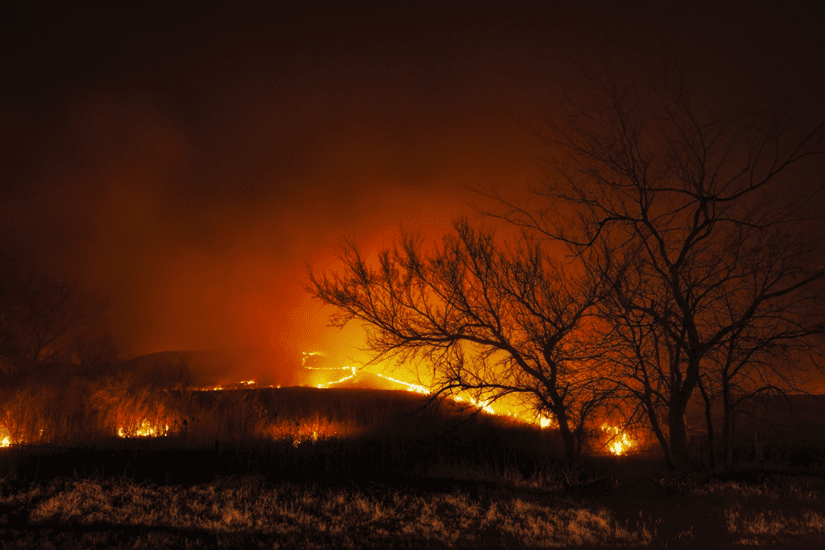
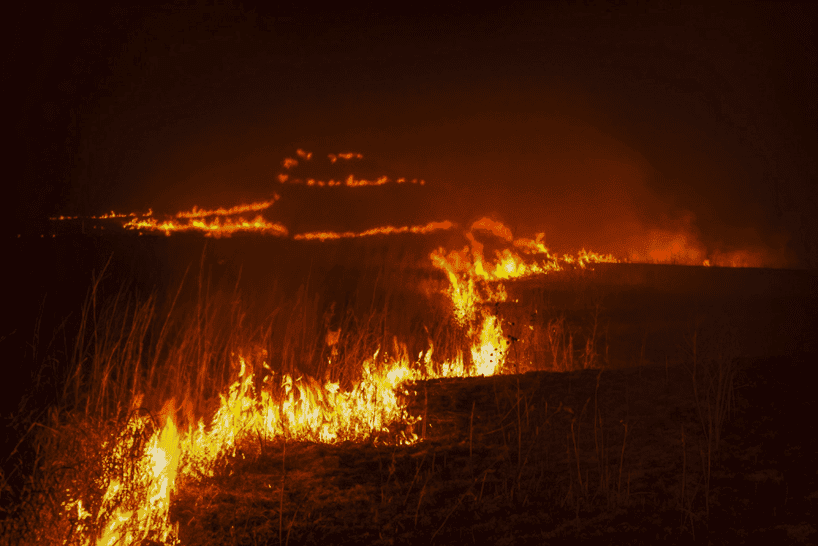
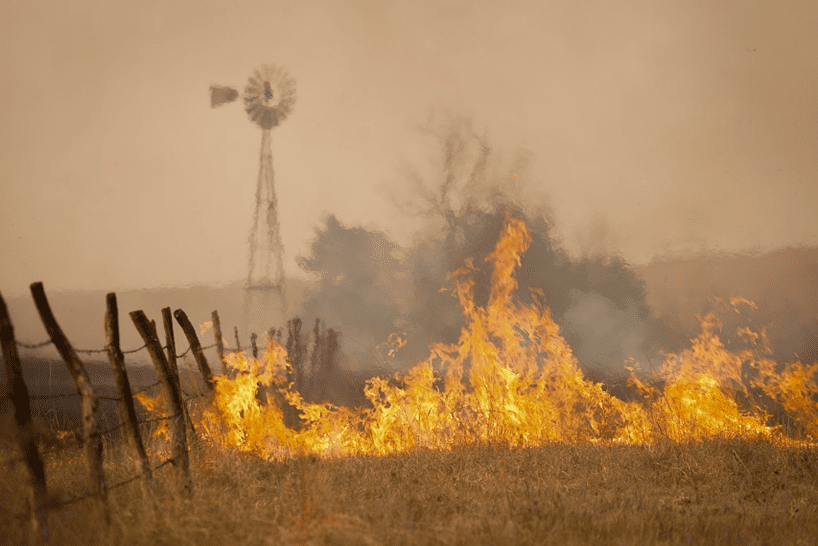
Of course, there are also lots of opportunities for tighter compositions, focusing on smaller sections of burns as I’ve shown in the last few photos above. The flames make for striking visual elements in either case.


Focusing on the shapes of the flames themselves is also an opportunity to create unique photos. The flames constantly change size and shape as they move across the vegetation. It really is magical to watch.
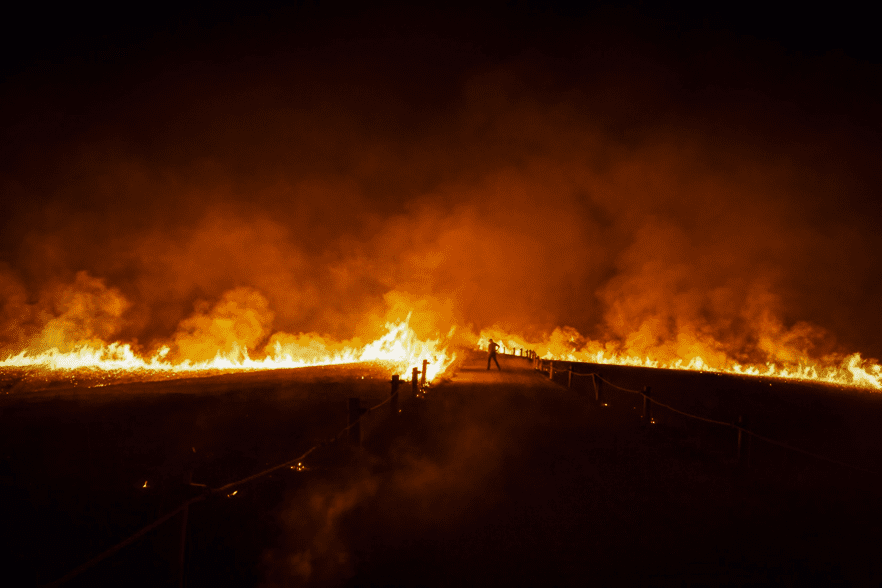
The prescribed burns are managed by a number of different techniques including the extensive use of backburns, but also direct control of the fires. It can be very dramatic to catch a scene with someone actively working on controlling and directing the fire. I was fortunate to catch this view of someone patrolling a night burn. To me, this photo has a very dramatic feeling and is one of my favorite burn photos.
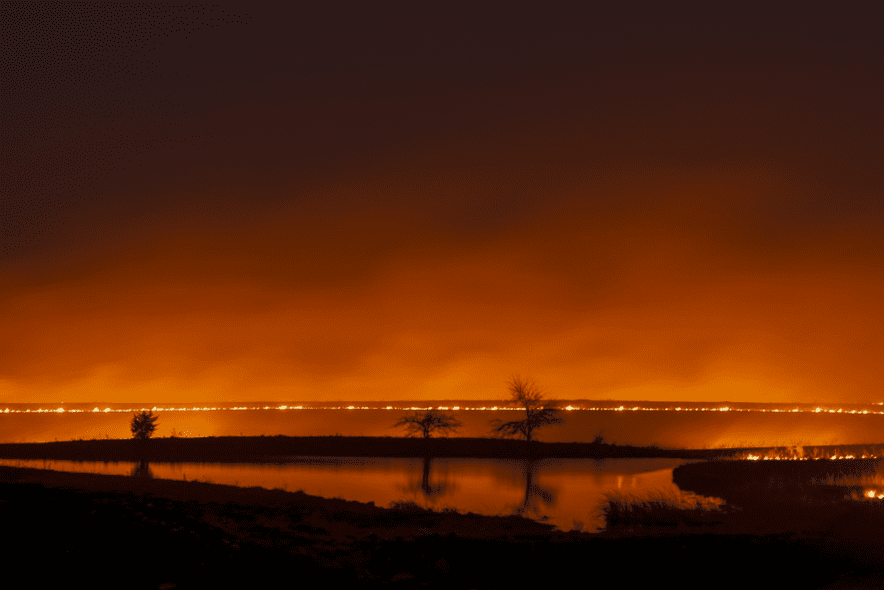
This next photo is another one of my personal favorites. I had been out one evening photographing burns, and as I was returning home, I turned off the highway and headed towards a fire I could see in the distance. I happened across a fire reflected in the water of a small pond. The color of the sky reflected on the surface of the pond was really stunning. I’ve never come across a scene like this again, I’m really glad I was able to experience this though.
Whenever I’m out photographing the burns, I’m almost always photographing from public roads. I try to be aware of where the people are that are managing the burns and stay out of the way. If I can, I try and make sure and ask if I’m going to be in the way. The last thing I would want to do is to cause a problem if someone needed to get to another part of a burn in a hurry and I was in the way. The fires can move fast too, so it is good to be aware of what is going on and to not interfere in any way.
As always, thanks for stopping by my blog. If you would like to see more of my photos, please stop by my online galleries at: https://scott-bean.pixels.com/ or my main website.
Sources and further reading:
https://en.wikipedia.org/wiki/Tallgrass_prairie
https://www.epa.gov/ks/epa-region-7-research-spotlight-studying-fire-flint-hills
https://keap.kdhe.ks.gov/Ephtm/PortalPages/ContentData?CID=123
https://www.nps.gov/tapr/index.htm
https://home.nps.gov/articles/wildland-fire-in-tallgrass-prairie.htm
https://en.wikipedia.org/wiki/Flint_Hills
https://www.nps.gov/tapr/learn/nature/index.htm
https://www.nps.gov/tapr/index.htm